One worker assumes the extension cord near the puddle is fine—“It’s only a little water.” Another skips inspecting the ladder because “it was fine yesterday.” These small assumptions pile up until someone gets hurt. That’s where a simple, five-minute conversation can stop an incident before it happens. Toolbox talks are more than routine safety meetings. They are targeted, real-time interventions that keep safety top of mind, reinforce protocols, and build a culture where everyone watches out for one another.
These short discussions aren’t bureaucratic checkboxes. They’re frontline tools used across construction, manufacturing, utilities, and logistics to bridge the gap between policy and practice. When done right, they cut through complacency, clarify expectations, and empower teams to act safely—even under pressure.
Below, we unpack why toolbox talks are non-negotiable for any safety-conscious organization.
What Exactly Is a Toolbox Talk?
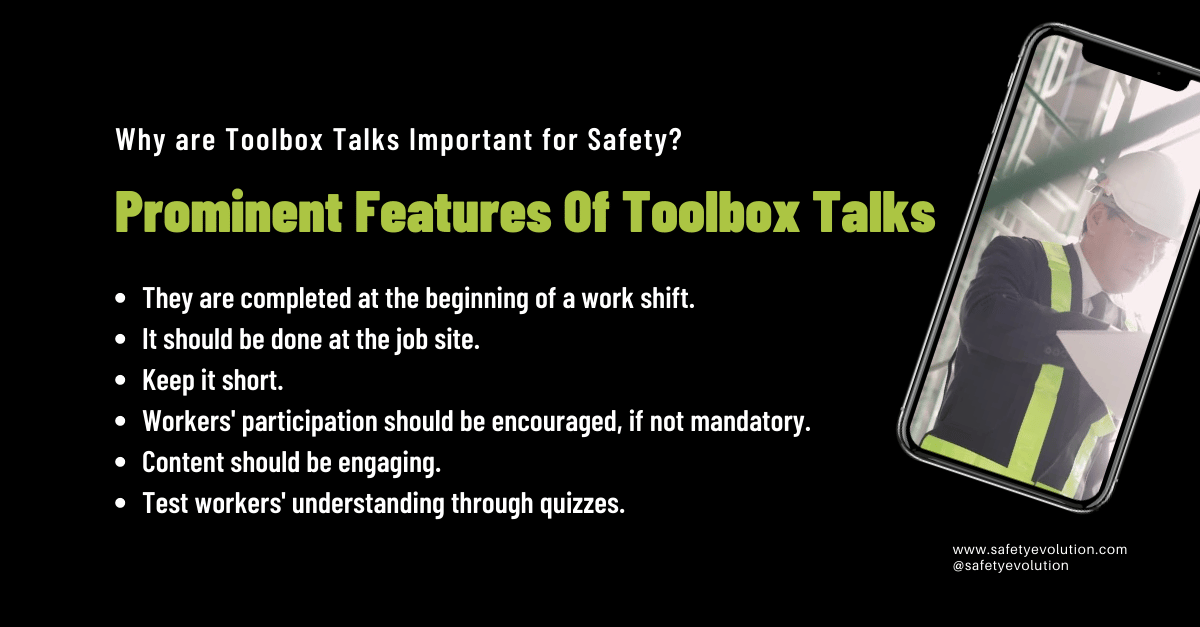
A toolbox talk is a brief, informal safety meeting—usually 5 to 15 minutes—held at the job site before work begins. It focuses on a specific hazard, task, or safety practice relevant to the day’s activities.
Unlike lengthy safety trainings, toolbox talks are: - Task-specific – tied directly to the work being performed - Interactive – encourage questions, input, and discussion - Timely – delivered in the moment, when relevance is highest - Frontline-led – often facilitated by supervisors or crew leads
For example, a roofing crew might hold a toolbox talk on fall protection before climbing onto a steep slope. A warehouse team might discuss forklift blind spots before starting loading operations.
The goal isn’t to lecture. It’s to align the team, surface concerns, and ensure everyone understands the risks and safeguards.
Preventing Accidents Before They Happen
Most workplace incidents stem from preventable errors—miscommunication, skipped steps, or overlooked hazards. Toolbox talks interrupt that cycle by forcing attention to the immediate risks.
Consider this scenario: a crew is preparing to dig near underground utilities. Without a talk, someone might assume the area was already marked. But during the session, the foreman confirms the locate tickets haven’t arrived. The crew delays work, calls the utility company, and avoids a catastrophic strike.
That’s the power of timing and relevance. Toolbox talks surface hidden assumptions and correct them in real time.
Common accident types they help prevent: - Slips, trips, and falls – by reviewing housekeeping and PPE needs - Electrical hazards – by confirming lockout/tagout status - Struck-by incidents – by discussing equipment zones and spotters - Confined space risks – by reviewing entry permits and monitoring
Each talk builds awareness. Over time, those micro-interventions compound into fewer near misses and lower injury rates.
Reinforcing Safety Culture Beyond Compliance
Compliance is the baseline. Culture is what keeps people safe when no one’s watching.
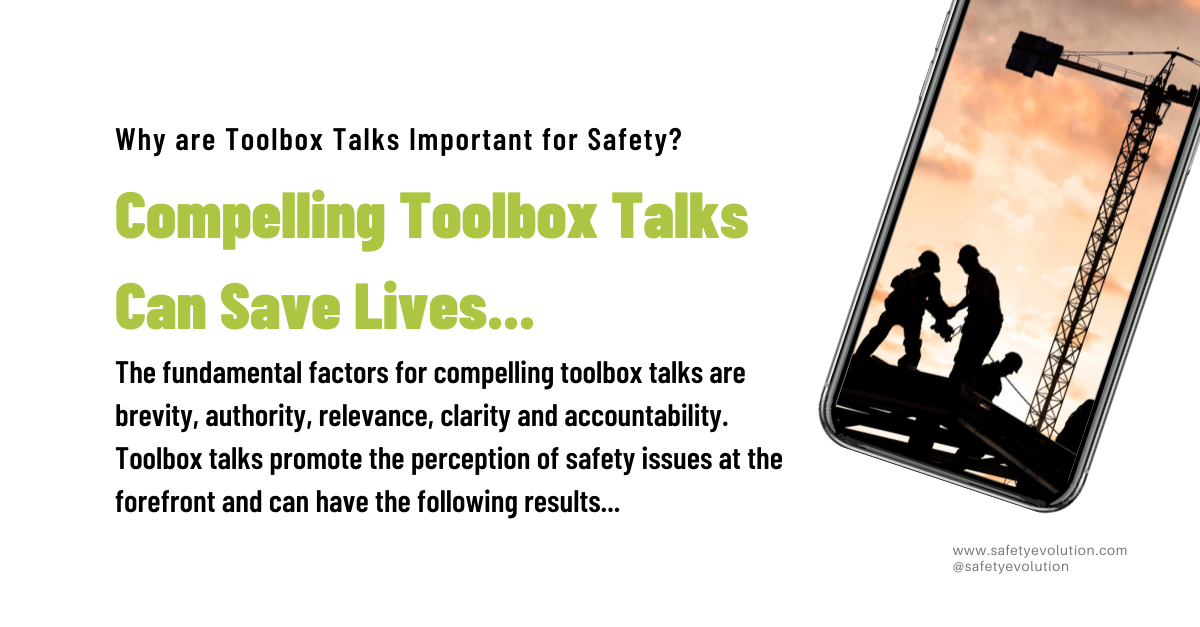
Toolbox talks shape that culture by making safety a shared conversation—not a top-down mandate. When workers contribute, they’re more likely to own their safety and call out hazards.
A strong safety culture shows up in behaviors like: - A laborer reminding a colleague to secure their harness - A new hire asking about chemical storage without fear - A team pausing work when weather changes unexpectedly
These actions don’t come from posters or handbooks. They come from repeated, meaningful dialogue—exactly what toolbox talks provide.
Companies that run effective talks report higher engagement, better reporting of near misses, and stronger team cohesion. Safety stops being someone else’s job and becomes everyone’s responsibility.
Closing the Gap Between Training and Real-World Application
Employees often complete safety training but struggle to apply it on-site. The gap between classroom learning and field execution is where accidents happen.
Toolbox talks bridge that gap by contextualizing training.
For instance: - A forklift operator knows the theory of load balancing. But a talk before shift highlights today’s uneven terrain and reminds the team to reduce speed and use spotters. - A crew trained in confined space entry gets a refresher on gas monitor calibration—because yesterday’s unit failed a bump test.
These sessions ground abstract knowledge in real conditions. They answer the unspoken question: “How does this apply to what I’m doing right now?”
This is especially critical for: - New or temporary workers - Multi-lingual crews - High-turnover environments
When knowledge is reinforced in context, retention improves and mistakes drop.
Driving Accountability and Documentation
Toolbox talks aren’t just about the moment—they create a paper trail of proactive safety.
Each session should be documented with: - Date and time - Topic and facilitator - Attendees’ names or signatures - Key points discussed
This record serves multiple purposes: - Proof of due diligence during OSHA or client audits - Trend analysis – spotting recurring hazards across weeks - Accountability – verifying that safety was addressed daily - Training gaps – identifying topics that need deeper review
Without documentation, a talk might as well not have happened. It’s the difference between “We probably talked about it” and “Here’s the signed log from last Tuesday.”
Smart teams use digital forms or safety apps to streamline logging. Others keep binders at the site office. The method matters less than the consistency.
Common Mistakes That Undermine Effectiveness
Not all toolbox talks deliver value. Many fail because of poor execution.
Watch out for these red flags:
1. Going through the motions A supervisor reads from a script, no one engages, and the team disperses. This isn’t a talk—it’s a time check. If there’s no interaction, the message doesn’t stick.
2. One-size-fits-all topics Discussing fire extinguishers every Monday, regardless of the day’s work, breeds disengagement. Talks must match the task.
3. Ignoring worker input Safety isn’t a lecture. If workers can’t ask questions or share concerns, they disengage. The best talks are two-way.
4. Skipping documentation No record means no accountability. It also makes it impossible to track participation or identify recurring issues.
5. Holding talks too late If the meeting happens after work has started, key personnel may miss it. Always conduct before active operations begin.
Fixing these issues turns a compliance ritual into a safety lever.
Practical Examples of High-Impact Toolbox Talks
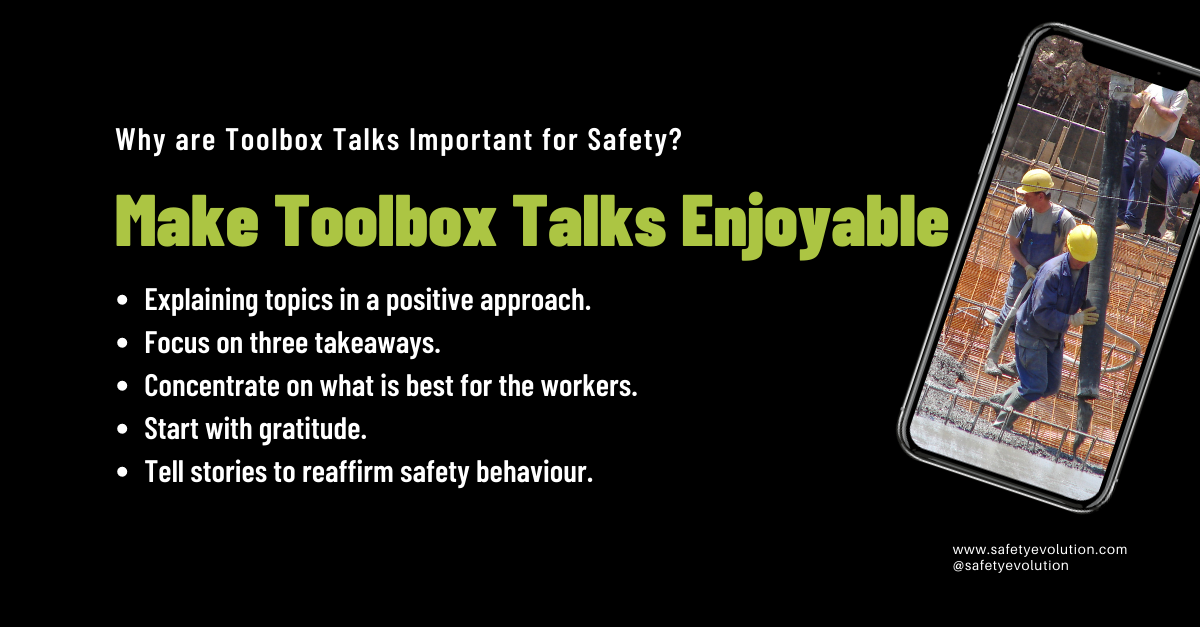
Real-world relevance is what separates useful talks from forgettable ones. Here are three examples that show the difference:
Example 1: Hot Work Near Flammables - Hazard: Welding near stored solvents - Talk focus: Fire watch duties, extinguisher check, permit verification - Outcome: Crew confirms fire blanket is staged and spotter is assigned
Example 2: Working in Extreme Heat - Hazard: Heat stress during summer roof repairs - Talk focus: Hydration schedule, buddy system, signs of heat exhaustion - Outcome: Team agrees to take 10-minute shade breaks every hour
Example 3: Night Shift Visibility - Hazard: Low-light conditions during roadwork - Talk focus: High-vis PPE, lighting placement, flagger positioning - Outcome: Supervisor checks all vests and adds temporary floodlights
Each example links the hazard directly to the day’s work and results in a clear action.
How to Run an Effective Toolbox Talk
Follow this practical workflow to ensure every talk lands:
1. Choose a relevant topic Pull from the day’s job plan, weather conditions, or recent near misses.
2. Keep it short and focused Stick to one hazard or procedure. Avoid info dumping.
3. Engage the team Ask questions: “What would you do if the guard failed?” or “Has anyone seen this go wrong before?”
4. Confirm understanding Have someone summarize the key safety action. Avoid yes/no questions.
5. Document and file Use a standardized form. Store logs for at least one year.
6. Follow up If a hazard was identified, verify it was addressed. Close the loop.
Consistency beats perfection. A simple, regular talk beats an occasional perfect one.
Final Thoughts: Make Safety a Daily Conversation
Toolbox talks are not magic. They won’t eliminate risk by themselves. But when used consistently, they create a rhythm of awareness that prevents complacency.
They turn safety from a policy into a practice. From a checklist into a conversation. From something enforced to something embraced.
The most effective safety programs don’t rely on annual trainings or posters alone. They use daily interactions to keep risk top of mind.
If you’re not holding toolbox talks, start tomorrow. Pick one hazard. Gather your crew. Talk for five minutes. Document it.
That small habit could be the reason no one gets hurt.
How often should toolbox talks be held? Ideally, daily—especially in high-risk environments like construction or manufacturing. At minimum, weekly or before starting a new task.
Who should lead a toolbox talk? Supervisors, foremen, or safety officers typically lead, but experienced team members can also facilitate with proper guidance.
Can toolbox talks be conducted remotely? Yes, for remote or hybrid teams, virtual talks via video call can work—if attendance, interaction, and documentation are ensured.
Are toolbox talks required by OSHA? OSHA doesn’t mandate “toolbox talks” by name, but they strongly recommend pre-job safety briefings under general duty clauses and specific standards.
What topics should be covered? Focus on immediate hazards: PPE, fall protection, equipment safety, chemical handling, weather impacts, and emergency procedures.
Should employees sign attendance sheets? Yes. Sign-in sheets prove participation and support compliance during audits or incident investigations.
Can toolbox talks reduce workers’ compensation costs? Yes. By preventing incidents, companies often see lower claims, fewer lost-time injuries, and reduced insurance premiums over time.
FAQ
What should you look for in Why Toolbox Talks Matter for Workplace Safety and Compliance? Focus on relevance, practical value, and how well the solution matches real user intent.
Is Why Toolbox Talks Matter for Workplace Safety and Compliance suitable for beginners? That depends on the workflow, but a clear step-by-step approach usually makes it easier to start.
How do you compare options around Why Toolbox Talks Matter for Workplace Safety and Compliance? Compare features, trust signals, limitations, pricing, and ease of implementation.
What mistakes should you avoid? Avoid generic choices, weak validation, and decisions based only on marketing claims.
What is the next best step? Shortlist the most relevant options, validate them quickly, and refine from real-world results.