In 2023, a maintenance technician in Ohio reached into a conveyor system to clear a jam. The machine powered on unexpectedly. The result: a crushed hand and a preventable OSHA violation. This kind of incident — entirely avoidable — underscores why lockout tagout locks and tags aren’t just regulatory checkboxes. They’re lifelines.
Lockout tagout (LOTO) is the backbone of energy control in industrial environments. At its core, it’s a safety procedure that ensures machines are completely shut down and cannot be restarted during maintenance or servicing. The physical tools that make this possible? Lockout locks and tagout tags.
These aren’t interchangeable accessories. They serve distinct but complementary roles. Locks physically prevent energy sources from being engaged. Tags communicate critical information — who applied the lock, when, and why. Together, they form a system that protects lives.
Let’s break down the components, applications, and real-world implementation of lockout tagout locks and tags.
Why Lockout Tagout Isn’t Optional
Every year, hundreds of workers suffer severe injuries or fatalities due to unexpected energization of machinery. According to OSHA, compliance with the Control of Hazardous Energy standard (29 CFR 1910.147) could prevent nearly 120 deaths and 50,000 injuries annually.
The principle is simple: when equipment is being serviced, all hazardous energy sources — electrical, hydraulic, pneumatic, mechanical, thermal — must be isolated and rendered inoperative.
But a switch isn’t enough. A simple “off” state can be flipped back on by someone unaware of ongoing work. That’s where lockout devices come in.
Lockout locks physically secure energy-isolating devices like circuit breakers, valves, or disconnect switches. Tagout tags accompany them, providing visibility and communication.
Without either, the system fails.
One plant manager in Michigan learned this the hard way. A mechanic was repairing a hydraulic press. A colleague, unaware of the maintenance, re-energized the system remotely. The press activated mid-repair. The injury was catastrophic. Investigation revealed missing lockout locks and inconsistent tagging. The total OSHA penalty: $180,000.
The takeaway? LOTO isn’t about gear alone. It’s about procedure, discipline, and visibility.
Lockout Locks: Types and Use Cases
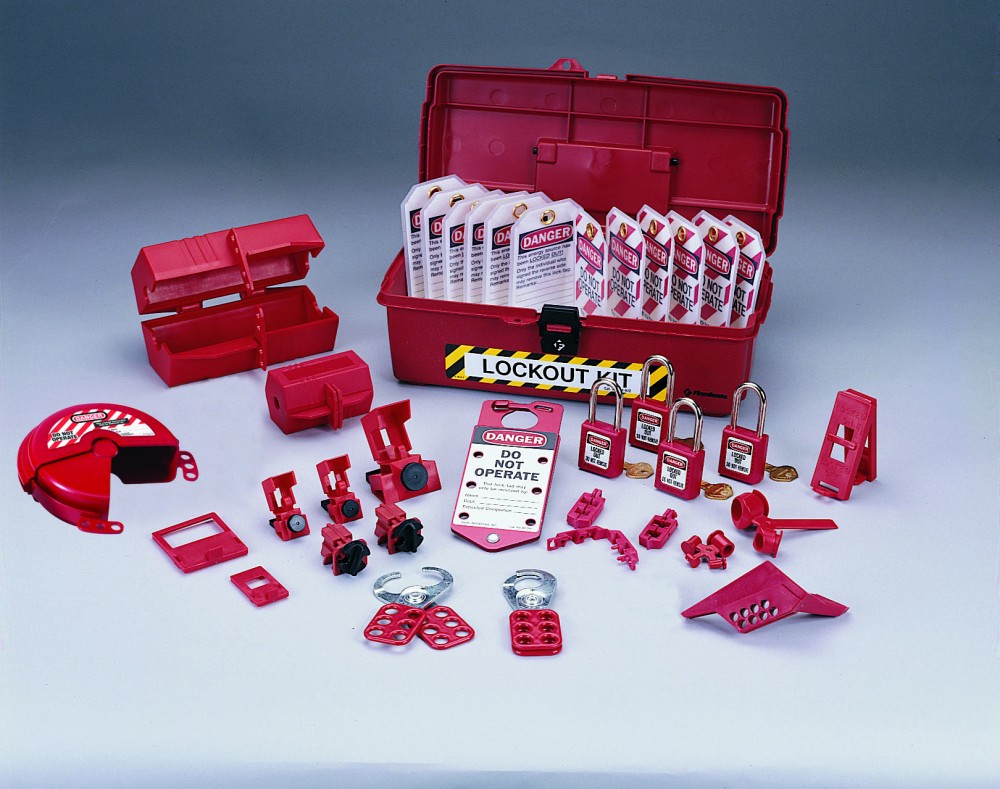
Lockout locks are the physical barrier between danger and safety. They’re not regular padlocks. They’re designed specifically for LOTO procedures — often color-coded, standardized, and keyed differently to prevent misuse.
Here are the most common types:
1. Hasp Locks Used when multiple workers are servicing the same machine. A hasp allows each technician to apply their individual lock. The machine stays locked until every lock is removed — enforcing individual accountability.
Common mistake: Using a single lock for multiple workers. This violates the “one person, one lock” rule and creates confusion during release.
2. Electrical Disconnect Locks These fit over circuit breakers or disconnect switches. They prevent re-energizing by blocking the switch handle. Variants include: - Bolt-on clamp locks for secure attachment - Universal fit models for various switch sizes
3. Valve Locks Used on ball valves, gate valves, or pneumatic lines. They block handle movement and prevent accidental opening. Some include sliding sleeves or locking collars.

Pro tip: For gate valves, use a rod lock that secures the valve stem. Ball valves need quarter-turn locks that immobilize the lever.
4. Plug and Cord Locks For portable equipment, these clamp around power cords and plug them into a lockout box. Prevents reconnection into outlets.
5. Group Lockout Boxes When multiple energy sources are involved, a group lockout box can centralize control. Each isolating device is locked, and the keys are stored inside the box — which is then secured with individual locks from each worker.
This ensures no single person can restart the system prematurely.
Tags don’t stop machines. They stop decisions.
A tagout tag is a durable label affixed to a lock or energy source. It tells others: Do not operate. Work in progress. Here’s who to contact.
But not all tags are effective.
A torn, handwritten tag with smudged ink won’t stop anyone. Effective tags are: - Printed with durable, weather-resistant material - Pre-formatted with fields for name, date, department, and reason - Brightly colored (usually red or orange with bold text) - Paired with a unique ID number for traceability
OSHA allows tagout-only procedures under limited conditions — but only if the tag provides “at least as much protection” as a lock. In most cases, that’s nearly impossible. Tags can be ignored, removed, or overlooked. Locks cannot be bypassed without force or a key.
Still, tags are essential for communication.
Imagine a night shift technician approaching a locked-out lathe. Without a tag, they might assume the lock was forgotten. With a clear tag stating “Motor bearing replacement — J. Rivera, 8 AM–12 PM,” they know to wait or escalate.
Tags also serve as audit trails. During safety reviews, a facility can verify who performed lockouts, how often, and whether procedures were followed.
Common Mistakes That Undermine LOTO
Even facilities with LOTO programs fail in execution. Here are recurring issues:
1. Using Personal Locks for Non-LOTO Tasks A worker uses their LOTO lock to secure a locker. Later, during a maintenance emergency, the lock is missing. Solution? Assign LOTO locks only for energy control — and store them separately.
2. Tagging Without Locking Especially in environments where physical locking is “inconvenient.” This violates OSHA’s hierarchy: locks first, tags only when locks aren’t feasible — and even then, with additional safeguards.
3. Incomplete Energy Source Isolation A technician locks the main power switch but forgets the hydraulic accumulator still under pressure. Stored energy can be just as deadly as live current. LOTO procedures must cover all energy forms.
4. Skipping the Verification Step After locking out, workers must verify zero energy state — try to start the machine, check pressure gauges, test for voltage. Skipping this is like assuming a gun is unloaded without checking.
5. Poor Training and Documentation If only one person knows how to lock out a machine, the system is fragile. OSHA requires documented procedures, periodic inspections, and annual retraining.
Selecting the Right Lockout Tagout Equipment
The best LOTO system matches your equipment, workforce, and risk profile. Here’s a comparison of five leading LOTO lock and tag solutions:
| Product | Type | Key Features | Best For |
|---|---|---|---|
| Seton 39700 Series Lockout Hasp | Hasp Lock | 1/4" shackle, accepts up to 6 locks, corrosion-resistant | Multi-worker maintenance teams |
| Grace Industries G1001 Electrical Lockout | Circuit Breaker Lock | Fits most breakers, UV-resistant polymer | Electrical panels in manufacturing |
| Safeguard Supply SG-VALVE-1 | Ball Valve Lock | Universal fit, 360° rotation lock | Pneumatic systems, chemical plants |
| Master Lock 1690T Lockout Station | Wall-Mount Kit | Includes 10 locks, 10 tags, hasp, breaker lock | Small to mid-sized facilities |
| Brammer LOTO Pro System | Digital Tagging + Physical Locks | QR-coded tags, cloud tracking, audit logs | High-compliance environments |
For companies scaling LOTO across multiple sites, digital solutions like the Brammer system offer traceability and real-time monitoring. A supervisor can scan a QR code on a tag and see who applied it, how long it’s been active, and whether verification was completed.
But even low-tech setups work — if they’re consistent.
Real-World LOTO Workflow
Here’s how a properly executed lockout tagout process unfolds in a food processing plant:
- Preparation
- Supervisor identifies the equipment (packaging line) and all energy sources: electrical (3-phase), pneumatic (air lines), mechanical (conveyor springs).
- Notification
- Operations team is informed that Line B will be down for motor replacement.
- Shutdown
- Line operator powers down the machine using the proper sequence.
- Isolation
- Technician applies:
- - Electrical lock on disconnect switch
- - Valve lock on air supply line
- - Hasp lock on emergency stop circuit
- Tagging
- Tags are attached to each lock with:
- - Name: M. Chen
- - Date: April 5
- - Reason: Drive motor replacement
- - Expected completion: 2 PM
- Verification
- Technician attempts to start the line (fails — good). Uses voltage tester and pressure gauge to confirm zero energy.
- Work Performed
- Motor is replaced safely.
- Removal
- After cleanup, M. Chen removes their locks and tags. Only then is the line re-energized.
Each step is documented. The entire process takes 18 minutes — a small price for preventing a lifetime of injury.
Building a Culture of LOTO Compliance
Equipment matters. Procedures matter more. But culture matters most.
In high-performing facilities, LOTO isn’t policed — it’s practiced. Workers don’t lock out because OSHA says so. They do it because they’ve seen the alternative.
Leadership plays a critical role. When plant managers personally apply locks during audits, it sends a message. When near-misses are reported without blame, transparency grows.
One paper mill reduced LOTO violations by 76% in 18 months by: - Replacing faded tags monthly - Holding quarterly “LOTO drills” - Rewarding teams for zero incidents - Using real incident footage in training
Compliance isn’t about fear. It’s about respect — for the work, the machine, and the person next to you.
Lockout tagout locks and tags are more than hardware. They’re symbols of a commitment to safety. A lock says, “This machine stays off.” A tag says, “I’m counting on you to respect that.”
In environments where energy moves fast and mistakes move faster, these small devices carry immense weight. Choose the right ones. Train relentlessly. Audit consistently.
Then, every shift ends the way it began — with everyone going home safely.
FAQ
What should you look for in Lockout Tagout Locks and Tags: Your Safety System Explained? Focus on relevance, practical value, and how well the solution matches real user intent.
Is Lockout Tagout Locks and Tags: Your Safety System Explained suitable for beginners? That depends on the workflow, but a clear step-by-step approach usually makes it easier to start.
How do you compare options around Lockout Tagout Locks and Tags: Your Safety System Explained? Compare features, trust signals, limitations, pricing, and ease of implementation.
What mistakes should you avoid? Avoid generic choices, weak validation, and decisions based only on marketing claims.
What is the next best step? Shortlist the most relevant options, validate them quickly, and refine from real-world results.